
Identify the rise

The authur of this article sure likes the Comparaduns, My freind Jay made me a believer of the pattern on the Big Horn
Fly Fishing tips from Al Caucci
The most important item in flyfishing is the fly at the end of your leader. Bob Nastasi and I have spent the last 25 years developing and improving the "Compara" series of flies. Judging by the number of people fishing these flies today, especially the Comparaduns or variations of it, they have become (along with the parachute dry flies) the hatch-match pattern of choice. We prefer our Comparaduns over parachutes because they are more durable and float longer than the parachutes. Try them and I'm sure you'll agree.
One of the most important steps you can take to improve your fishing is to learn to identify the feeding patterns of the trout. A good place to start is by learing to identify trout rise forms.
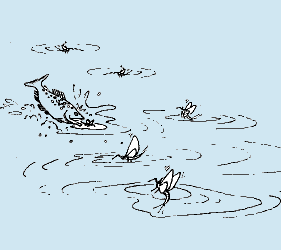 Splashy Rise: Indicates that trout are rising to very active mayfly duns, caddis adults, quick rising pupa or struggling stonefly adults on the surface. Sometimes the trout will jump completely out of the water in its attempt to capture a surface adult.
Solution: Try a Comparadun, Compara-caddis or Compara-stone imitation fished dead drift on the surface or an A.C. caddis pupa dead drift and then twitched back in small jerks.
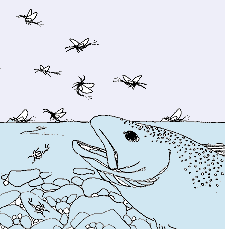 Head Rise: If you actually see heads poking out of the surface, the trout are usually feeding on mayfly, caddis or stonefly adults and/or cripples right on the surface.
Solution: Again the mayfly, caddis and stonefly adult patterns such as the Comparadun and Compara-caddis in appropriate size and color should do the job fished dead drift.
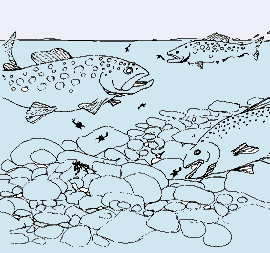 Dorsal Fin and Tail Rise: Very common with wild fish on rich trout rivers like the West Branch of the Delaware. Trout gorge themselves on nymphs and emergers an inch or two below the surface and ignore surface flies.
Solution: Try appropriate size and color nymph, dead-drift like a dry fly through the feeding lane. This takes good eyesight and reflexes to know when to strike. An easier way is to use a Compara-emerger as an indicator with a 16" - 24" long tippet tied to the bend of the hook and a nymph tied to the end as a dropper. If you see a fin or disturbance near your Compara-emerger, set your hook firmly but not too quickly or you'll wind up with a break off!
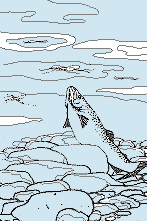 Sip Rise: Delicate rings - sometimes pronounced, other times almost imperceptible. Caused by trout leisurely tipping up to suck in spent spinners or tiny duns and spinners, insects like tiny Trico's and Pseudocloeon (#24's or 26's) or midges.
Solution: Use a Compara-spinner or tiny Comparaduns and Compara-emergers according to the size and color of the naturals on the water. This rise form is also prevalent when trout rise to tiny (#20 and smaller) ants in the surface film.



What's Related